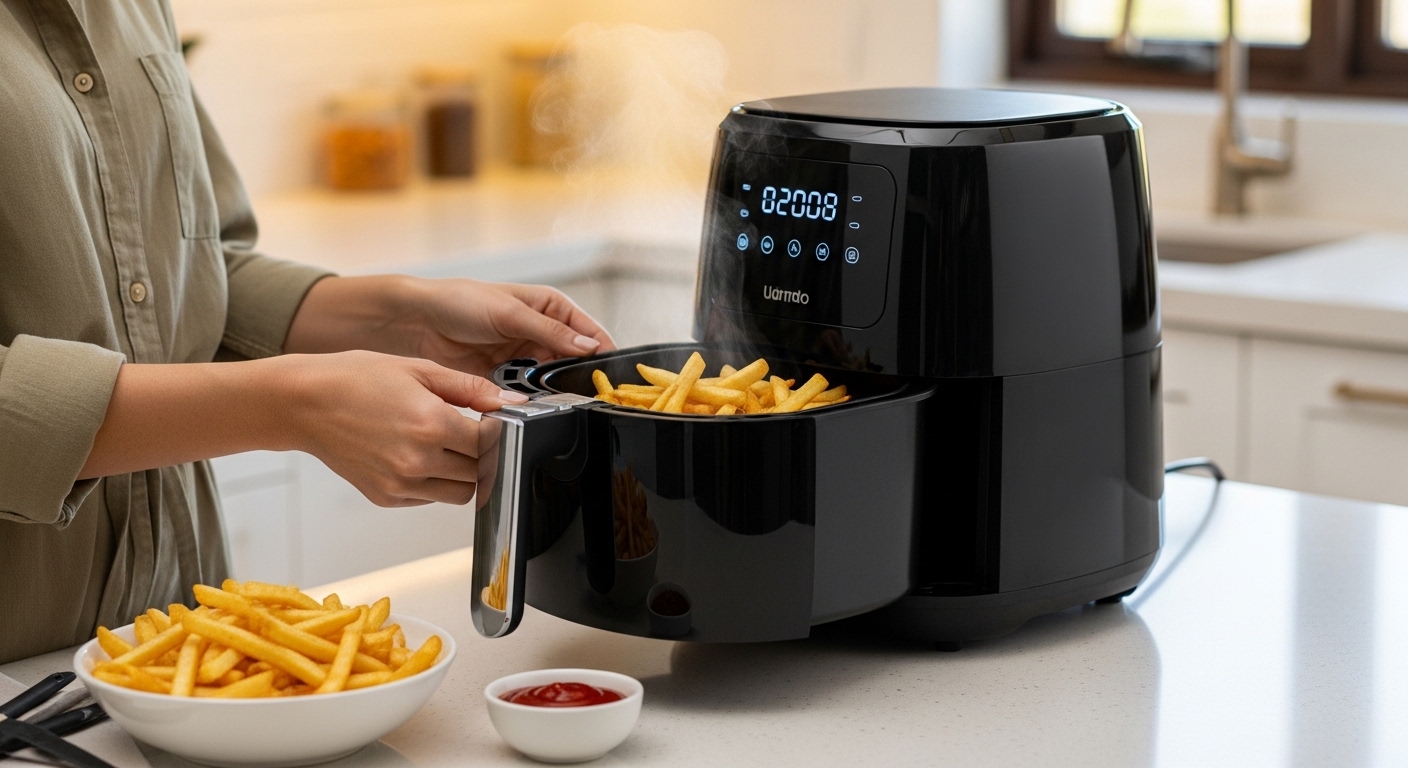
Air fryers are famous for crispy food with less oil — but they also have one common complaint: dry chicken, tough steak, rubbery leftovers, and vegetables that taste roasted… but lifeless.
The truth is, air fryers don’t dry food out because they’re bad appliances. They dry food out because they cook faster and more aggressively than most people expect.
This guide shares practical, real-world techniques to help you get crispy results without sacrificing moisture, texture, or flavor.
Why Food Dries Out in an Air Fryer
Air fryers work by circulating extremely hot air around food at high speed. That airflow removes surface moisture quickly — which creates crispiness, but can also overcook food internally if you use standard oven cooking habits.
Most dryness comes from:
- Cooking at temperatures that are too high
- Cooking too long
- Using no oil at all
- Overcrowding the basket
- Not adjusting time for smaller portions
- Reheating at full power
Once you understand these patterns, air fryers become incredibly reliable.
The Golden Rule: Lower Temp, Slightly Longer Time
One of the easiest ways to prevent dryness is to reduce temperature slightly and extend cooking time a little.
High heat creates crisp exteriors fast, but it often pulls moisture out of the inside before food finishes cooking evenly.
A moderate temperature lets the interior cook gently while still allowing crisping at the end.
Time & Temperature Cheat Sheet (Moisture-Friendly Cooking)
These ranges prioritize moisture retention while still delivering crisp texture.
Chicken Breast
- Temperature: 360–370°F (182–188°C)
- Time: 14–18 minutes
- Flip halfway through
Tip: Let chicken rest 3–5 minutes after cooking. This redistributes juices and prevents dryness.
Chicken Wings or Thighs
- Temperature: 380°F (193°C)
- Time: 18–22 minutes
These cuts contain more fat, which protects moisture naturally.
Salmon or Fish Fillets
- Temperature: 350–360°F (175–182°C)
- Time: 7–10 minutes
Fish cooks extremely fast. Overcooking by even two minutes can cause dryness.
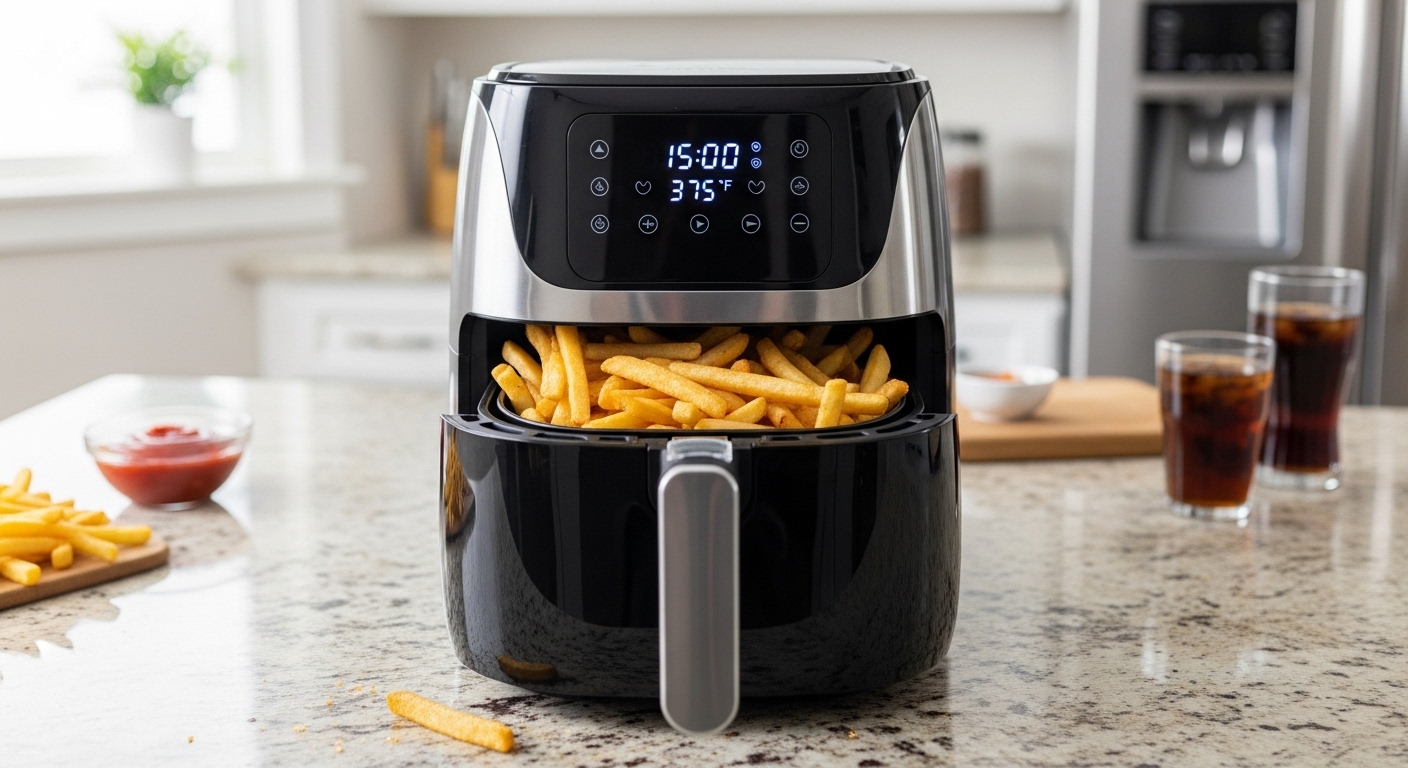
Frozen Foods (Fries, Nuggets, Snacks)
- Temperature: 375–400°F (190–204°C)
- Time: Follow package time but check early
Frozen foods already contain oil, so they usually stay moist.
Vegetables
- Temperature: 360–380°F (182–193°C)
- Time: 8–15 minutes depending on density
Dense vegetables like carrots or potatoes need longer than zucchini or peppers.
Reheating Leftovers
- Temperature: 300–325°F (149–163°C)
- Time: 4–8 minutes
Lower heat prevents moisture from evaporating too quickly.
Simple Oil Tricks That Make a Huge Difference
Many people avoid oil entirely when using an air fryer. That often causes dryness and uneven browning.
You don’t need much oil — just enough to protect moisture.
1. Use a Light Oil Mist Instead of Cooking Spray
A small amount of oil helps:
- Seal surface moisture
- Improve browning
- Prevent food from sticking
- Enhance flavor
A light mist or brushing a thin oil layer is usually enough.
2. Oil After Seasoning, Not Before
Adding oil after seasoning helps spices stick better and prevents uneven coating.
3. Choose Oils With Higher Smoke Points
Good choices include:
- Avocado oil
- Canola oil
- Grapeseed oil
- Light olive oil
These handle air fryer heat better and help maintain moisture.
Portion & Basket Setup (The Hidden Moisture Factor)
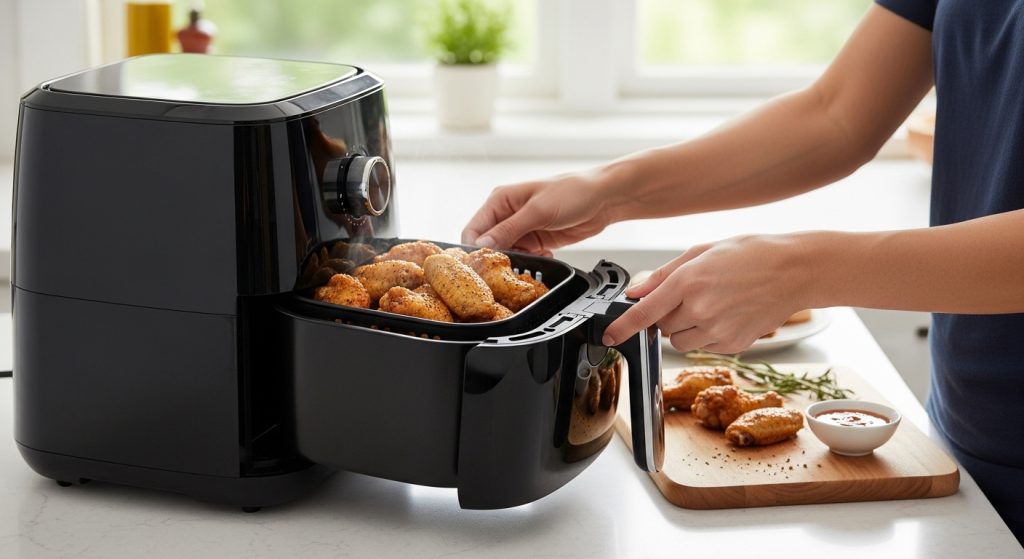
Air fryers cook best when air circulates evenly around food.
Avoid Overcrowding
Stacked food traps steam, which sounds helpful but usually leads to uneven cooking. Then you extend cooking time — and dryness happens.
Instead:
- Cook in single layers when possible
- Cook in two smaller batches if needed
Shorter, even cooking almost always produces juicier results.
The Flip & Shake Technique
Turning food halfway through cooking prevents one side from drying out while the other side cooks.
Flip or shake:
- Chicken pieces
- Fries
- Vegetables
- Breaded foods
Even heat exposure protects internal moisture.
Resting Food After Cooking (Often Ignored)
Just like traditional ovens or grills, resting food allows juices to redistribute.
Skipping this step can make food feel dry even when it’s perfectly cooked.
Recommended rest times:
- Chicken: 3–5 minutes
- Steak: 5 minutes
- Fish: 2 minutes
Smart Reheating: The Most Common Dryness Mistake
Reheating at full temperature removes moisture extremely fast.
Better approach:
- Lower the temperature
- Extend time slightly
- Add a tiny oil mist if food looks dry
This keeps leftovers crisp outside while staying tender inside.
Marinades & Coatings That Protect Moisture
Moisture-retaining ingredients help food survive high airflow cooking.
Good options include:
- Yogurt-based marinades
- Light sauces or glazes added near the end
- Breadcrumb or batter coatings
- Oil-based seasoning blends
Avoid sugary sauces at the start — they burn quickly and dry food out.
Adjusting for Food Size and Thickness
Air fryers cook smaller portions faster than most recipes expect.
If food pieces are thinner or smaller:
- Reduce cooking time
- Check doneness early
Thick pieces benefit from:
- Slightly lower temperature
- Slightly longer cooking time
Signs You’re About to Overcook
Watch for:
- Extremely dark browning early
- Food shrinking too quickly
- Excess smoke or dryness smell
These usually mean temperature is too high or airflow is too aggressive.
Common Beginner Mistakes That Cause Dry Food
- Cooking everything at maximum temperature
- Never using oil
- Forgetting to flip or shake
- Using oven cooking times without adjusting
- Ignoring food thickness differences
- Reheating leftovers at full heat
Avoiding these alone improves results dramatically.
My Real Experience Using Air Fryers Daily
The biggest lesson is that air fryers reward attention to small details.
Once I stopped treating them like mini ovens and started:
- Using moderate heat
- Adding a small amount of oil
- Checking food earlier
- Flipping halfway through
…the results improved instantly. Chicken stayed juicy, vegetables kept texture, and leftovers tasted freshly cooked.
Air fryers are less forgiving than traditional ovens — but they’re much faster once you understand how they behave.
Final Thoughts
Air fryers are excellent tools for fast, crispy cooking — but moisture control depends on technique more than recipes.
If you remember only three rules, remember these:
- Lower the temperature slightly and cook a little longer
- Use a light oil coating
- Flip or shake food halfway through cooking
Master those habits, and dry air fryer meals become very rare.