If your allergies flare up at home, it’s tempting to buy something that promises “cleaner air.” But air purifiers and dehumidifiers solve different problems—and picking the wrong one can feel like you wasted money.
Here’s the practical truth:
- Air purifiers help more often for allergies because they remove airborne particles like pollen, dust, and pet dander.
- Dehumidifiers help when humidity is the trigger, especially with mold, mildew, and dust mites.
Disclosure: Some links may be affiliate links. As an Amazon Associate I earn from qualifying purchases.
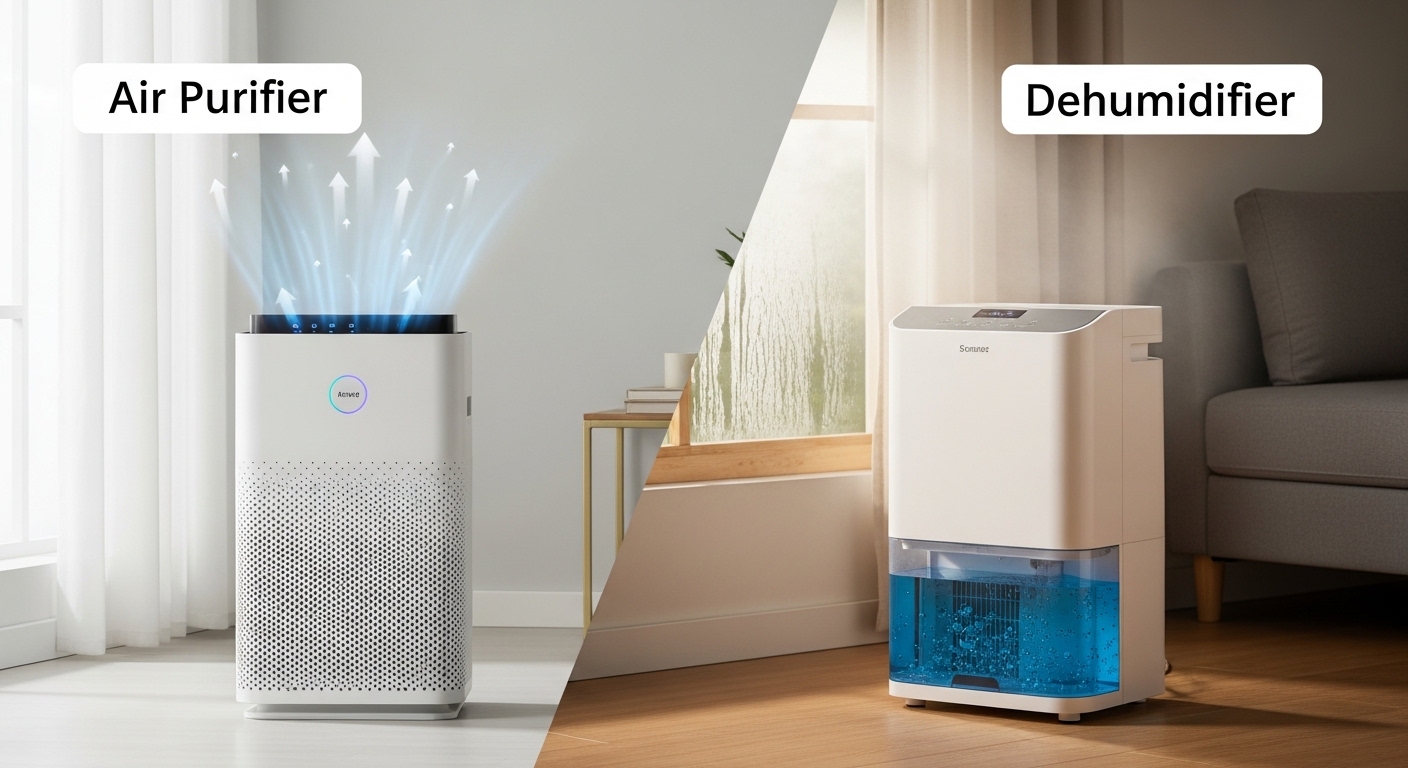
The core difference (simple explanation)
Air Purifier = removes particles from the air
Best for:
- Pollen
- Pet dander
- Dust
- Smoke particles
- Fine airborne debris
What it doesn’t do well:
- Lower humidity
- Stop mold growth by itself
- Fix water/moisture issues
Dehumidifier = removes moisture from the air
Best for:
- Mold/mildew risk
- Dust mites (they thrive in humid air)
- Musty odors from dampness
- Condensation problems
What it doesn’t do well:
- Remove pollen/dander from the air (it’s not a particle filter)
- Capture smoke/dust effectively
Which helps allergies more?
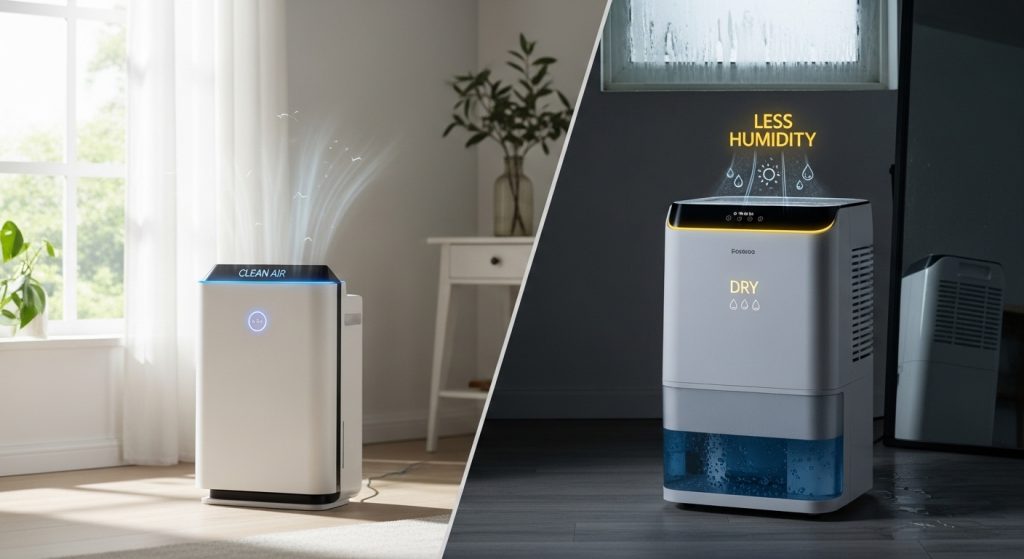
In most homes: Air purifier
If your symptoms are typical allergy triggers—pollen, pet dander, dust floating in the air—a true HEPA air purifier is usually the fastest, most noticeable improvement.
You’ll notice: less sneezing, less itchy eyes, less dust settling, better sleep—especially in the bedroom.
When a dehumidifier helps more
A dehumidifier can be the better first purchase if your allergies are tied to dampness:
- Musty smell
- Visible condensation on windows
- Basement feels clammy
- Mold spots or mildew
- Allergies worse in humid months/rainy season
- You suspect dust mites (common in humid bedrooms)
You’ll notice: less musty odor, fewer mold-related symptoms, less “sticky air,” and sometimes less morning congestion.
Pros & cons (real-life)
Air purifier — pros
- Best for pet dander + pollen + dust
- Great for bedrooms (sleep mode)
- Helps if you live near traffic, smoke, or cooking odors (with carbon filter)
Air purifier — cons
- Needs filter replacements
- Won’t fix humidity or mold sources
- Odors require a meaningful carbon stage (HEPA alone isn’t odor control)
Dehumidifier — pros
- Reduces conditions that cause mold and dust mites
- Helps basements, bathrooms, laundry rooms, humid climates
- Can reduce musty odor by preventing dampness
Dehumidifier — cons
- Requires emptying tank (or drain hose)
- Can add heat + noise
- Doesn’t remove airborne particles like dander/pollen
When you need BOTH (most common “best results” scenario)
You likely need both if:
- You have pets (dander + hair) and humidity is high
- You live in a humid climate and your home gets musty
- You have a basement + allergies
- You see condensation, mildew, or smell dampness
- Your allergies improve outside the home but flare indoors (common with dust mites/mold + particles)
Best combo approach:
- Dehumidifier controls the environment (prevents mold/dust mites)
- Air purifier removes the stuff you’re breathing (dander/pollen/dust)
Quick decision guide (pick the right one today)
Choose an Air Purifier if you mostly deal with:
- Pet dander
- Seasonal pollen
- Dust in the air
- Smoke particles / wildfire season
- You want better bedroom air
Choose a Dehumidifier if you mostly deal with:
- Musty smell, damp rooms, basement humidity
- Mold/mildew concerns
- Condensation on windows/walls
- Allergies that worsen in humid weather
Choose Both if:
- You have pets + humidity problems
- You suspect dust mites or mold + you still want cleaner air
- Your bedroom feels humid and you also wake up congested
Setup tips so it actually works
Air purifier placement (biggest mistake people make)
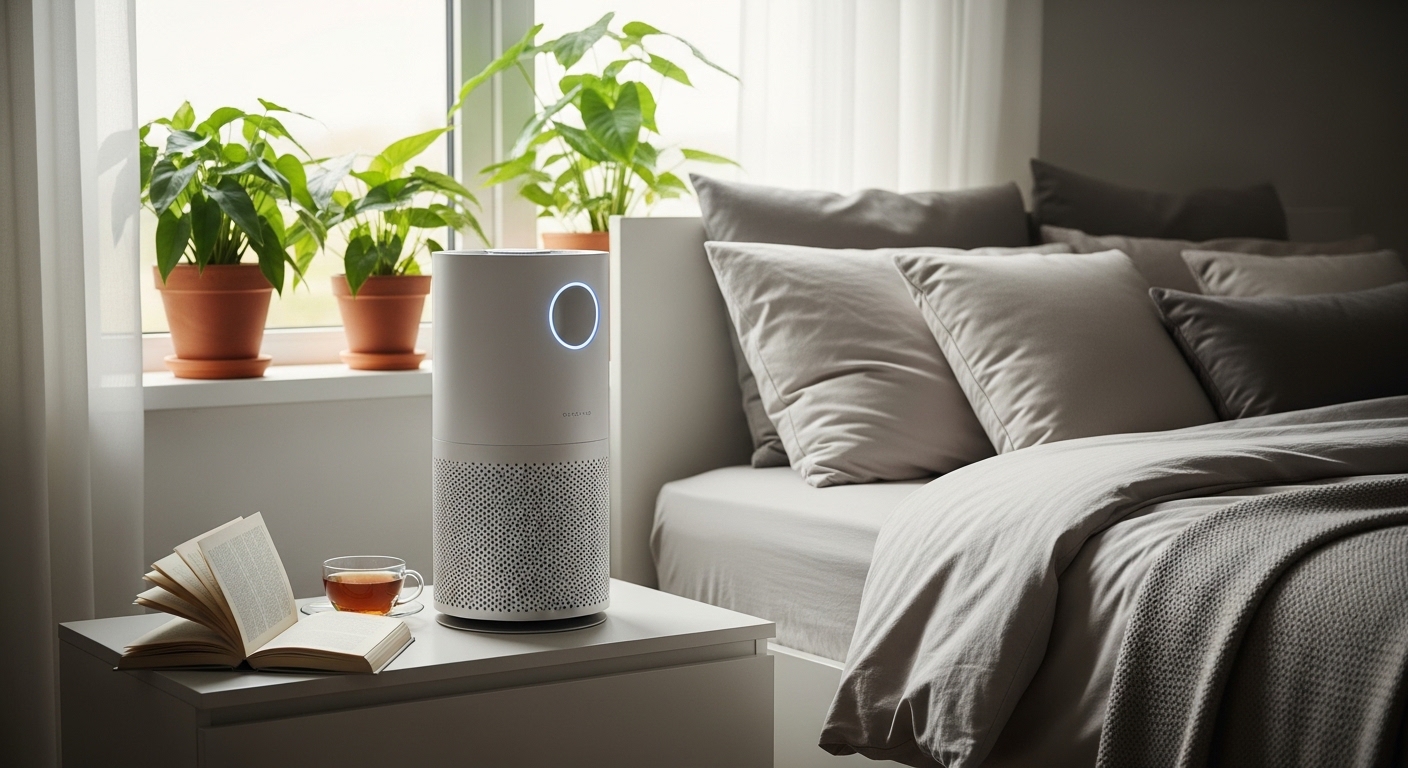
- Put it where you breathe most: bedroom near the bed, not hidden behind furniture
- Leave 6–12 inches of clearance around it
- Run higher speed for 30–60 minutes before bed, then sleep mode overnight
Dehumidifier targets
- Aim for 40–50% humidity (many allergy sufferers feel best here)
- Use it in damp zones first: basement, bedroom, laundry area
- Keep doors closed in problem rooms for faster results
Final verdict
If you’re choosing one for allergies:
- Air purifier is the best “most likely to help” choice for typical allergies (pollen, dander, dust).
- Dehumidifier is the best choice when dampness is the root issue (mold, mildew, dust mites).
- Both together is the best long-term setup in humid homes, pet homes, and basements.